



Long before there was a product, NextWork’s story started with Amber and a belief that learning could be so much better.
Here’s how that idea became NextWork, and the people, decisions and moments that shaped it along the way.
Amber was born in the UK to a British father and a Kiwi mother, and moved to New Zealand at two. As a kid she signed up for everything she could get her hands on: piano, guitar, darts, tap dancing, taekwondo, art groups, sports. There was endless curiosity about everything, and the belief that you can achieve anything you set your mind to.
The argument (2015)
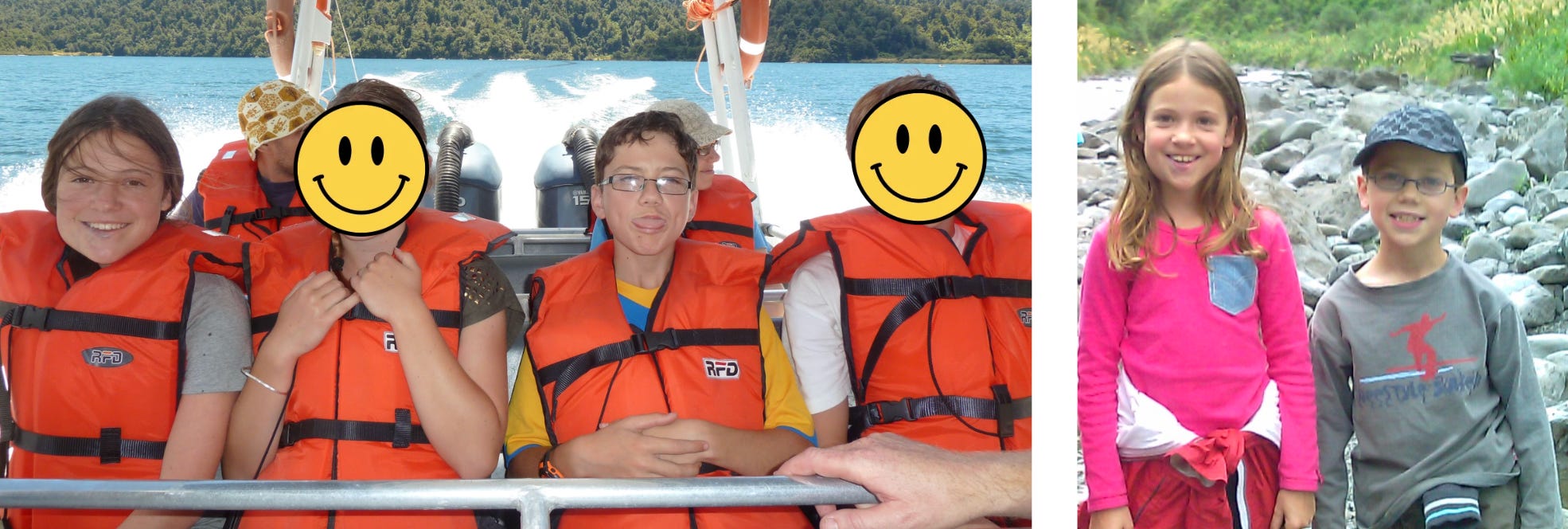
Amber was finishing high school in Palmerston North, New Zealand, where she had spent most of her time painting and reading. She walked into the lounge one afternoon and found her younger brother, Martin, hunched over a laptop working on a computer science assignment. She asked him to teach her…
He said no, more than once. He told her it was not for her, that she would not enjoy it, that she should not bother.
She took this personally enough that she went into school the next morning and convinced the digital technologies teacher to let her join the senior class despite having missed four years of prerequisites. It helped that the class had six students and could not really afford to turn anyone away.
Amber says she was not particularly good at it. What she found instead was that code worked the way painting did. You could make something out of nothing, on your own, with a strong enough internal sense of what was worth making. But unlike a painting, which hangs on a wall waiting for someone to walk past, code could travel. The same act of creation could reach people you had never met, in places you had never been.
Singapore (2020)
Amber studied software engineering at Victoria University in Wellington and spent a year of it at the National University of Singapore (the highest-ranked university in Asia).
She arrived expecting to travel, explore Asia, and enjoy a year abroad. Instead, she found herself surrounded by students working at a level she had never seen before. Classes where the bell curve sat above 95%. People who had been studying maths and computer science since they were kids. An 85% could feel like failing.
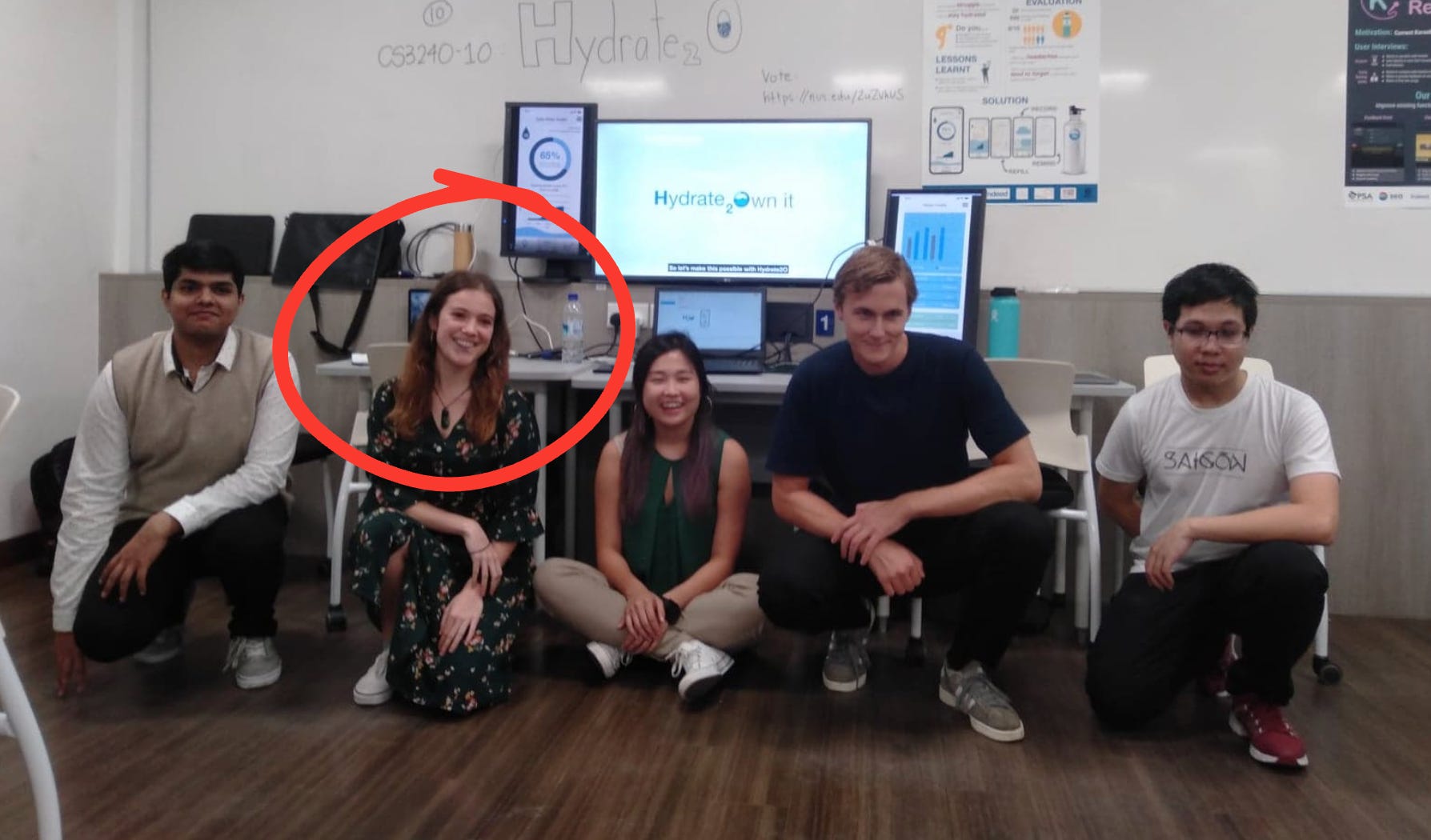
It was confronting, but it changed her sense of what was possible.
Amber came back to New Zealand for her final year feeling like everything was moving in slow motion. Singapore had taught her that her capacity was much higher than she had assumed. The gap between where she was and where she wanted to be was often just how long she was willing to work at something until that level became normal, which was a lesson that would matter almost immediately.
Salesforce Training (2021)
In Amber’s final year of university, she was put into a group project to build a real product for a real client. The client wanted it built in Salesforce. Nobody in the group knew what Salesforce was, and trying to figure it out introduced Amber to an entire industry her software engineering degree had never mentioned.
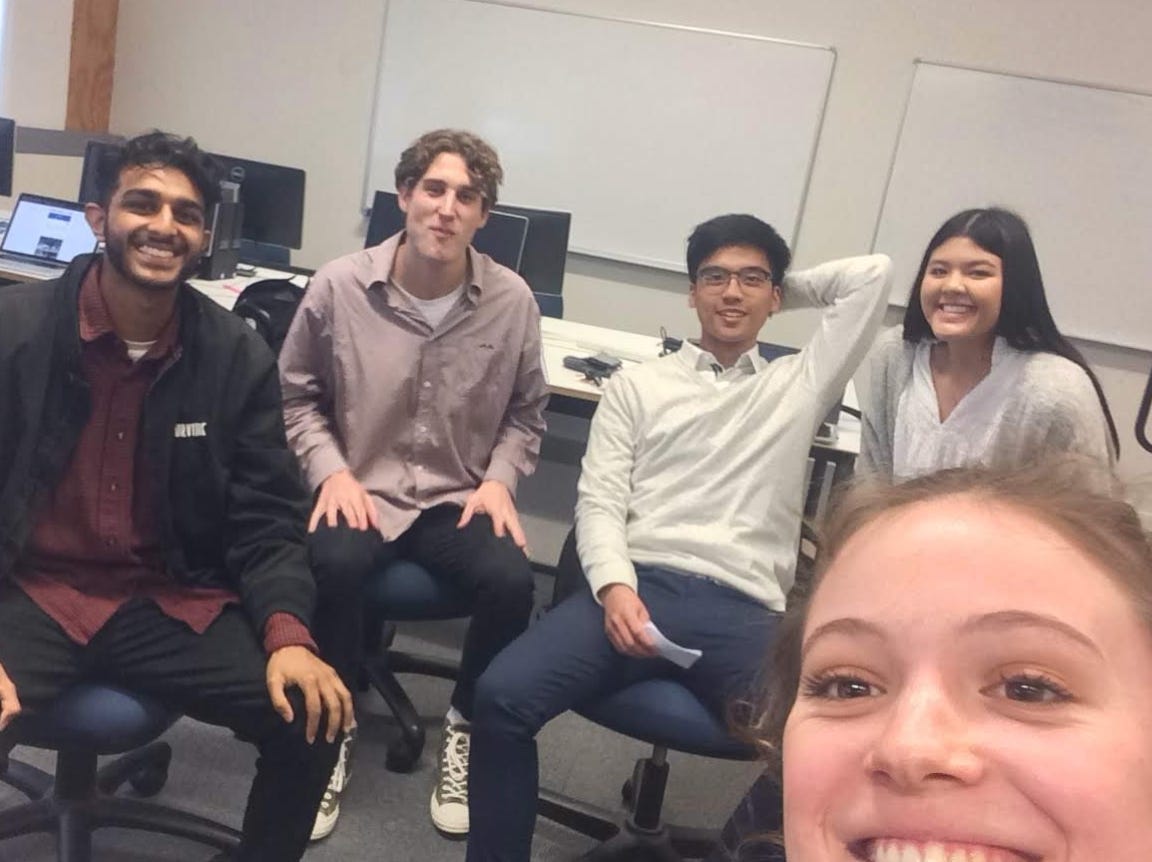
To learn more about Salesforce, Amber went to a local meetup in Wellington expecting just three or four people… finding 60 or 70 instead. People started offering her jobs after seeing her keep showing up.
The Salesforce world was bigger than anything she had been told about in her classes, and most of the people in it were earning a living from a category of work that nobody had thought to mention to a software engineering student.
She submitted her own honours thesis proposal that year, the only student in her cohort to do so, and used it to build an app for the Salesforce platform and try to sell it. The app was called Salesforce Training, lived on a $20 domain, and did not work particularly well. It was, however, the launching pad for everything after.
A month or two before she was due to start a graduate role at Salesforce, a message came through the site from a New Zealand company asking her rate to train their staff. It was Mediaworks, who ran most of the country’s radio stations. She named a number, took the contract, and discovered there was real demand for someone who could teach a difficult platform to people who had not grown up writing code.
That contract led to a second, the second to a third. By the end of the year she was running a full B2B training business under her own name.

The B2C side grew out of it. People started coming to her individually, not because an employer had sent them but because they wanted to be there. They wanted a promotion, a change, something new for themselves. It was the first time she saw up close what learning looks like when the motivation is internal rather than imposed. It became the thing she would eventually build a company around.
The stakes for these students were rarely small. Amber remembers people working through lunch breaks, logging on before work and after it, and showing up on weekends despite everything else going on in their lives. One student was a former truck driver who had been paralysed and was rebuilding a career from scratch. Another was pregnant and pushing through the course anyway. Another had just lost a parent and was using the moment to change the direction of their life. Amber took the responsibility of getting these people real results personally, and it shaped what she built next more than the certifications ever did.
To go all-in on B2C, Amber put together a free Salesforce workshop that she posted about on LinkedIn. She expected maybe two people to sign up. The post went viral instead, comments piling up with people asking to be enrolled, and around 300 people showed up to the call.
Feeling the momentum and excitement in the call, Amber ended up training a cohort of 16 people over six months, split roughly a third theory, a third hands-on work, and a third toward getting certified.


The certification prep was where most of the course’s time went, but Amber started noticing that the cert didn’t actually help learners get their next job or promotion. The certificate wasn’t the credential anyone on the other side of the table actually cared about.
So what Amber tried instead was capstone-style case studies, real design and architecture problems built around companies she already had relationships with through her training work. She swapped exam prep time for these projects and told learners to talk about the project in interviews instead of the certificate. The results changed almost immediately: learners started getting the job, the promotion, or the move into the team they actually wanted. So Amber leaned all the way into projects and started helping people learn how to talk about what they had built. She would read through drafts of how learners described their projects, cut anything that read poorly, and rewrite it into something that actually landed. That one-on-one editing eventually became a repeatable template, and was the first version of what would later become NextWork’s project documentation.
By two and a half years out of university she was running a profitable services business turning over $700k a year, teaching cloud and Salesforce to hundreds of people, with no co-founders, no investors, and no team. She also had a sister company, Cloud Station, hiring her top students and placing them on contract, which had grown into a small consultancy of its own.


That was the version of the business she could have continued for another decade and made her financially comfortable. It would have been a real company by most reasonable definitions, making the pivot to NextWork all the more powerful.
The pivot (2023)
The pivot from a Salesforce training business to NextWork was triggered by three forces all happening at once…
First, her students kept asking her to teach things beyond Salesforce, AWS and Azure and the wider cloud landscape, and the brand could not stretch to cover it.
Second, Salesforce’s legal team sent an email pointing out that the name Salesforce Training was a copyright infringement… (fair enough)
Third, and most decisive, Amber wrote down a list of everything she wanted to do in her lifetime and realised the list was long enough that she would never get through it on her current trajectory. The services business was making good money, but every year inside it was a year not spent on the larger problem that had been forming in her head through all the manual teaching.
That problem was that online learning did not work. It was boring, lonely, and the completion rates were terrible. It was disconnected from any trust signal an employer would respect. There was nowhere in the world someone could go to learn a tangible vocational skill, prove they had learned it, and walk into an industry that took the proof seriously.
She could see exactly what needed building. She just could not build it while running calls every weeknight from 5:30 to 9:30pm and teaching through weekends.
This is what led her to venture capital - VC investment is not a reward, a credential, or a signal of having made it. It is a direct exchange of money for time. Bootstrapping the platform would have taken two more years of running the services business in parallel. Taking investment bought those two years back.
The beta launch (November 2023)
Amber raised a pre-seed in July 2023, put her own money from the services business into an initial team, and we shipped the first version of the product the same week the funding landed.
Jon joined as founding designer in May, before the pre-seed round even closed. The first team, Amber, Jon, Nigel, Kevin and Nat, gathered on 16 August 2023 for a kickoff and targeted 20 November, three months out, for a closed beta with 70 university students learning AWS, Azure or Salesforce.


That first version of NextWork was essentially a blog. Amber and Nat wrote all the content by hand and Amber was on camera for all of it. The 70 students loved it.
It was also structured like a course:
Four weeks of theory
Three weeks of hands-on projects
Two weeks of certification exam prep
Two weeks of interview prep.
And time after time, learners raved about the projects the most. That was the part that taught them the most, kept them engaged, and made the theory finally click.
Going live (April 2024)
The beta taught us that what learners needed was different from what we had built. There were also hard lessons about leadership, hiring, and managing expectations.
Amber let the first engineer go and spent four months looking for replacements, sending around eight hundred cold LinkedIn messages and interviewing hundreds of people. Caldas and Krishna came out of that process, and within three months of starting, they shipped a second version that was meaningfully different from the first.
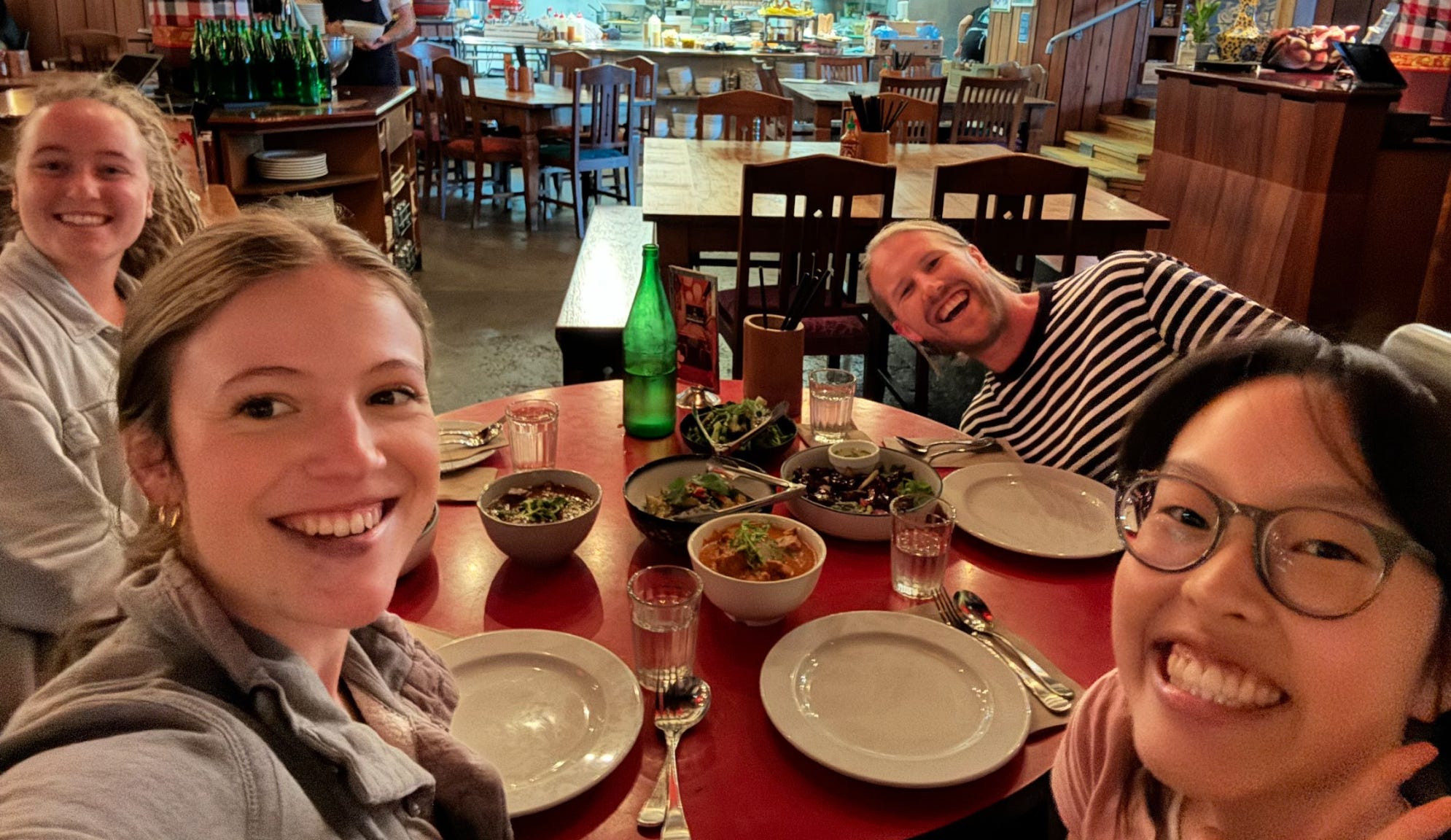
But during those four months without a platform, we started publishing free hands-on AWS project guides on a Webflow page, purely to get attention for a course we planned to sell later.
(Little did we know, the projects became the core of what NextWork is today.)
The community grew alongside it. Rather than asking people to sign up and wait for an email, we opened a forum on Circle, and it became the support layer holding learners through technical problems and the question of which project to start with. It also became the space for learners to show their love for NextWork, which became clear to us that the hands-on projects were really solving a problem that learners were having around finding quality content. People started running events, making videos and even baking cakes about NextWork - completely on their own.
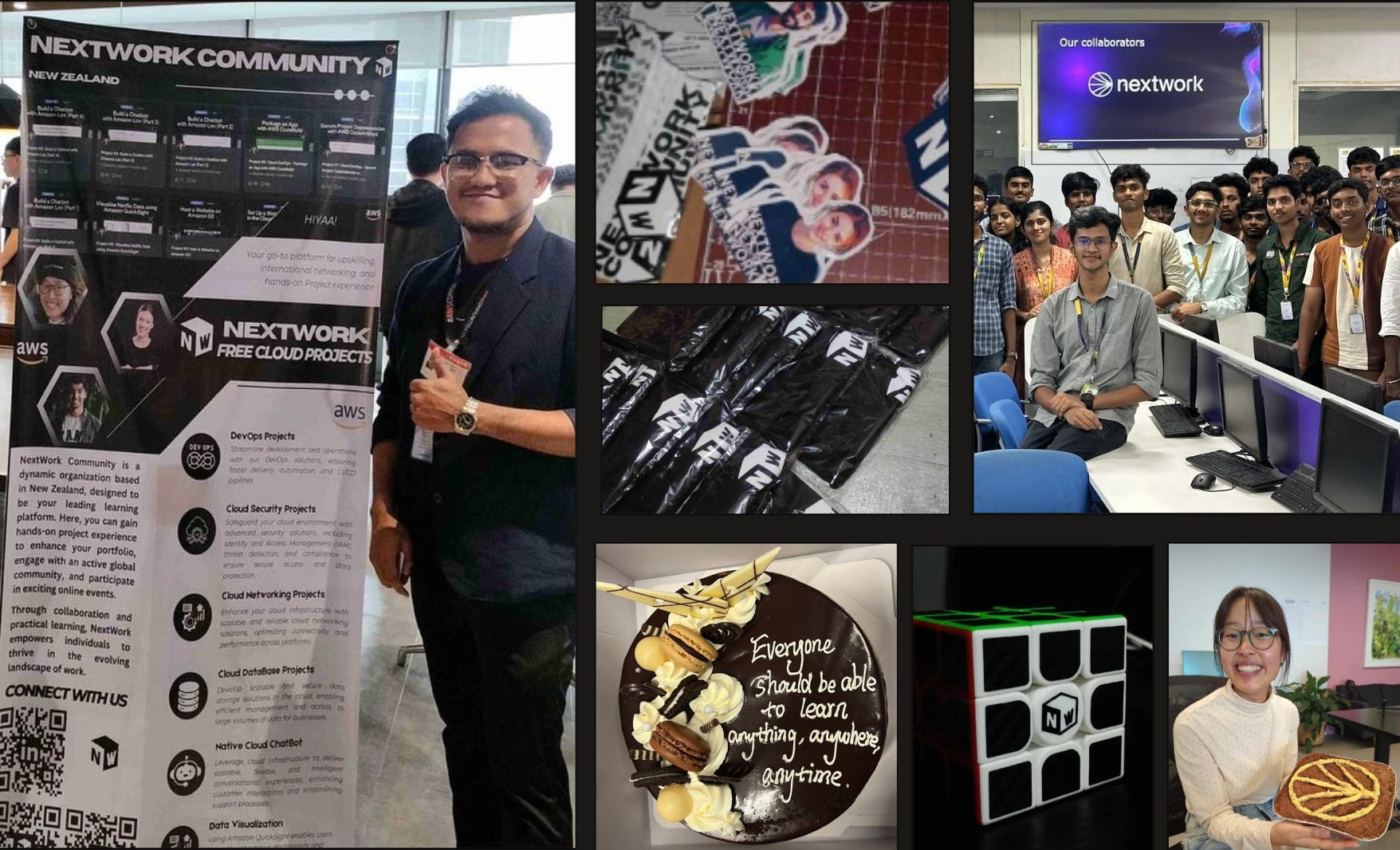
We also started posting on social in April, mostly because it was the only acquisition channel that costs nothing to grow organically. Our first 40 videos didn’t get much attention, but one about a hands-on project hit 10k views on TikTok overnight and eventually crossed 100k.
Maximus joined in June 2024 and took over social shortly. The goal was ten pieces of content a week; at its peak Maximus hit thirty. By the end of the year around 80% of traffic was organic social, with zero paid acquisition.
2025
If 2024 proved the model, 2025 was about scale and momentum:
Q1 brought a full rebrand, colour themes for documentation, a made-for-you recommendation feature, quizzes, and a rebuilt search and explore experience. Maya joined in March to run community, finishing a postdoc in the early mornings and weekends while balancing NextWork.
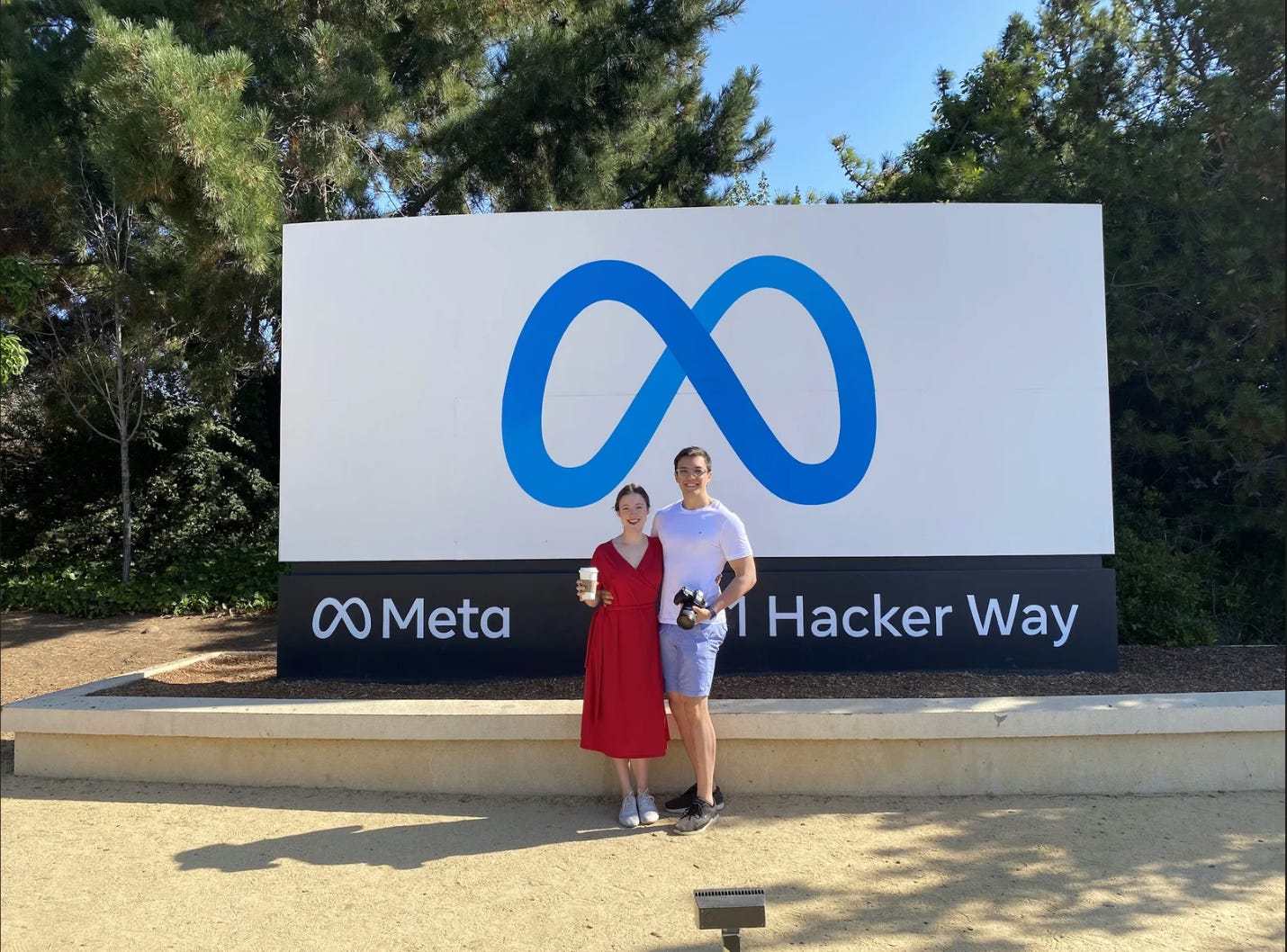
In Q2, Amber and Nat went to SF and raised a $4.5M seed on the back of 90,000 signups across 180 countries, a customer acquisition cost of $0.52 (against an industry average of $116), and a whole lot of learner love.
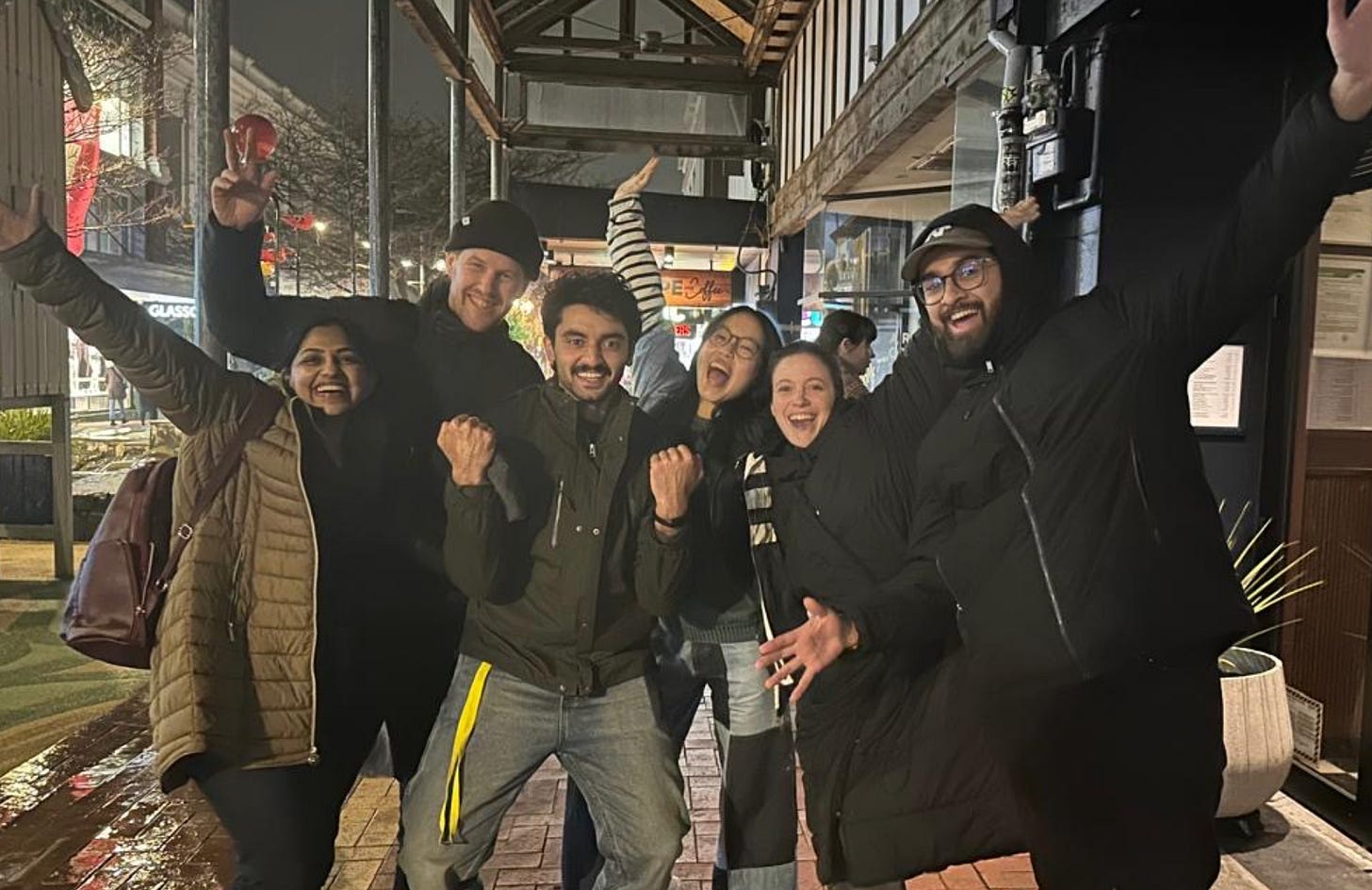
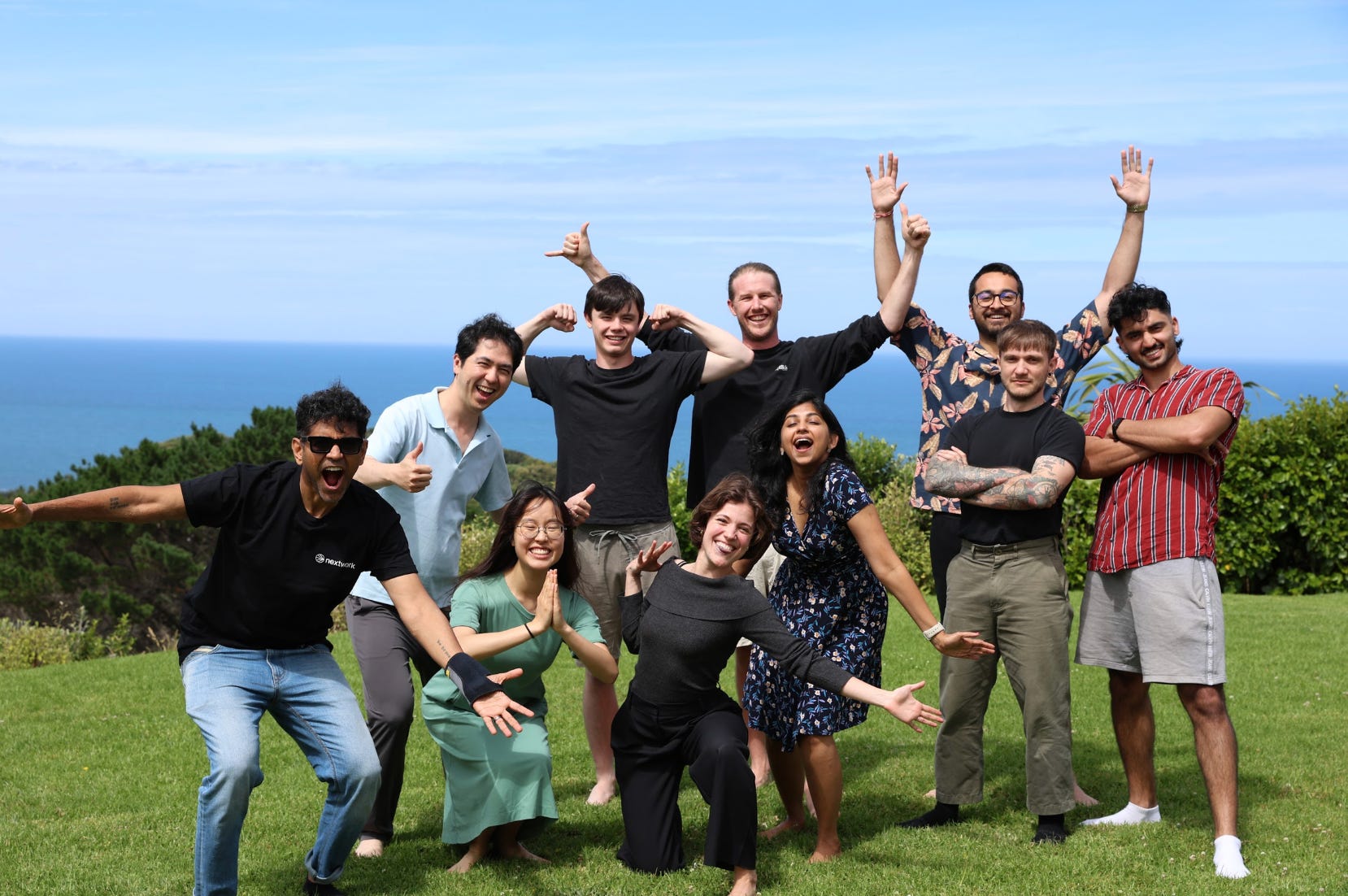
A full-day celebration when the team closed the raise! In Q3, Krishna rebuilt the entire front end in React in a matter of weeks and we shipped a new landing page. Nat also went back on releasing projects alongside an incredible intern, Kahu.
In Q4, Pano joined, and we released ASK, which lets learners chat with any part of a project, and live documentation, which lets them watch their write-up build as they work rather than only at the end.
2026
If 2025 was the year NextWork was loved, 2026 is the year we become undeniable.
The team relocated from Wellington to Austin in March, saying goodbye to loved ones and taking on a new life in America.
Within a couple months of moving, we also started serving 200,000+ learners, and released new features that let learners generate their own projects. William joined in June as the first engineer hired in person in Austin, after a three-month search.
Then, Jamal and Rita joined in July!
As an ex-NBA coach, Jamal joined to take the helm on social content - and started owning all shorts and carousels within two weeks of starting.
Rita joined NextWork from Corgi’s founding GTM team in Austin, and is now taking NextWork to universities all over the US via a new community program (Build & Brew) she’s leading from scratch.


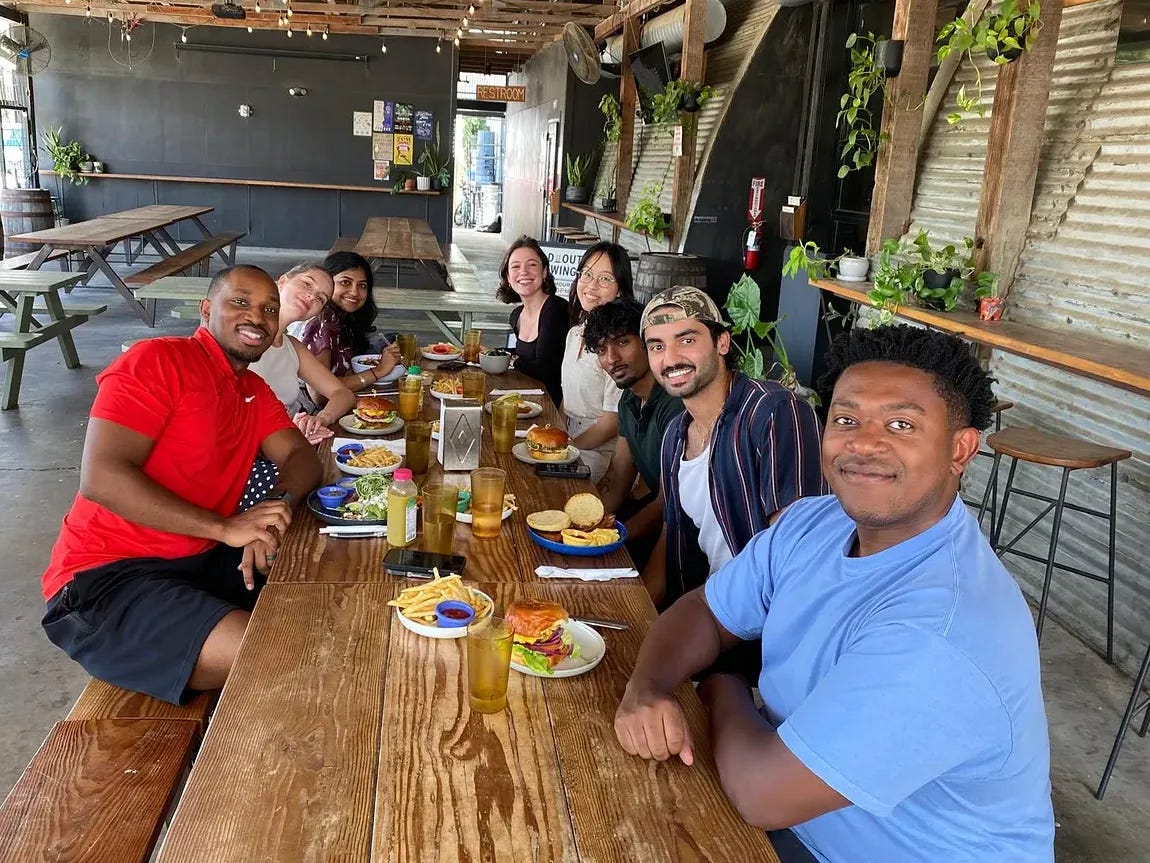
It was also a huge win to have Loheth and Brandon come on board in August - two incredibly talented and driven engineers passionate about learning and solving tough problems. For the first time in NextWork history, we onboarded two people on the same day!
Where this goes
We want to build a world where learning a serious, life-changing skill doesn’t depend on where you were born, whether you can move across the country, or whether you can afford to spend years waiting for the right institution to let you in.
Someone who wakes up one morning wanting to become a dentist should be able to start that journey that same day. The same should eventually be true for renewable energy, advanced manufacturing, healthcare, nuclear fusion, and every other field where the world needs more capable people.
We know we can’t start there. Before NextWork can help train someone to work on a power grid or care for a patient, we have to earn that trust by proving, at scale, that we can teach difficult skills exceptionally well.
That’s why every new domain matters. Each one is another step toward building an institution people can trust with increasingly important parts of their lives.
We’re building NextWork with that timescale in mind. We want it to still exist in a hundred years, helping generations of people learn what they’re capable of and giving them a way into work that might otherwise have felt out of reach.
We’ve written the first few chapters.
What will we get to write together?
Big fan of Maximus!!!